In May Sapient Nitro posted a great Infographic on Mobile Payments – The Future of Money and Mobile Payments here. With all of the talk recently on Mobile Payments with the launch of the iPhone 5, I thought it was worth posting again here.


In May Sapient Nitro posted a great Infographic on Mobile Payments – The Future of Money and Mobile Payments here. With all of the talk recently on Mobile Payments with the launch of the iPhone 5, I thought it was worth posting again here.
White Labelling Mobile Payments with LevelUp SDK and API’s
In the mobile payment race, driving people to transact through one app might not be enough. LevelUp is banking that merchants are interested in having their own branded apps that can still take advantage of LevelUp’s payment and loyalty infrastructure. So it’s creating a white label tool for bigger businesses to integrate LevelUp into their own apps.
Businesses will be able to integrate a new LevelUp SDK in coming months into their existing apps. Or they’ll be able to turn to LevelUp, which can build them a custom app powered by LevelUp in 8-12 weeks.
LevelUp has been signing up businesses including Sweetgreen, a small chain of restaurants in the Washington DC area. Sweetgreen had been looking to join LevelUp’s payment network but wanted to have its own app for users to download.
 LevelUp’s chief ninja Seth Prietbatsch said white labeling LevelUp lets businesses with a strong brand or good…
View original post 306 more words
The “point of sale” is now everywhere.
A long, early Saturday flight home highlighted the end of our Mobilize 2012 event, giving me plenty of time to digest all of the salient points made by our speakers and panelists. Many of these spoke to not only the current state of mobile, but the future too. And that future is fast approaching as we’re watching improvements in mobile broadband networks, better software tools, smarter app discovery engines, and hardware cycles that are revving faster than ever.
Some of the more poignant thoughts from our Mobilize speakers exemplify this theme, so here are a few I thought worth sharing:
View original post 368 more words
So much for an ACCC and Senator Stephen Conroy’s Parliamentary Enquiry in Australia about technology companies differential pricing. Apple has done it again – blatant price gouging.
We may get to buy the iPhone 5 earlier than anyone else on September 21st, but we will all have to pay more. Over $150 more to be exact – even based on a generous AU$1.00 = US$1.00 exchange rates. Apple has released unlocked iPhone 5 pricing in the US which start at US$649 for 16GB (selling for AU$799 in Australia), US$749 for 32GB (AU$899) and US$849 for the 64GB model (AU$999).
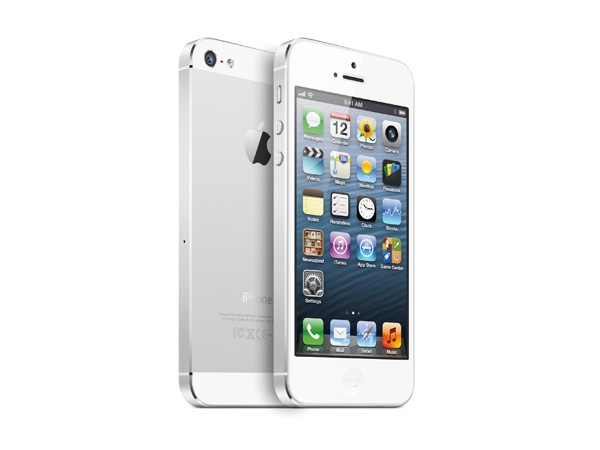 So, if you have a friend or contact in the US, get them to buy you one there and ship it here and give the Australian Apple store a miss – you will save yourself over $100 after shipping (and paying GST, if you had to).
Well, its over. The long awaited launch of the Apple iPhone 5 has happened and just about everything that had been rumoured was officially released by Apple. The iPhone 5 comes with a taller 4″ screen, 20% lighter and thinner, aluminium back, smaller 8 pin digital connector, high speed 4G LTE network support, faster dual core A6 processor and new and improved earbuds. Pretty much everything had been leaked before the launch so none of these features were much of a surprise.
However, the one area, that I was convinced Apple would come out with a real game changer was to include the Near Field Communication (NFC) chip and link the new iOS 6 Passbook application with mobile payments using NFC. I was wrong! They didn’t. Apple VP Phil Schiller today came out with a weak statement that “Passbook does the kind of things that customers need today“. I don’t think so!
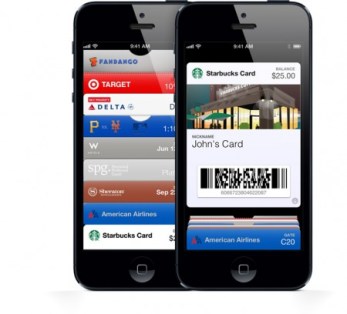 Passbook will be great for Loyalty Cards, Gift Cards, Airline and concert tickets – anything that has a 2D barcode to scan – but that’s nowhere near mobile payments. Apple have really missed a golden opportunity to help shape the mobile payments market and take a leadership position as they did with music and iTunes. Today Apple announced that they have 435 Million active iTunes accounts – all with current Credit Card and payment details, allowing one touch payment for iOS apps and even purchasing Apple products in selected Apple Stores. A huge number of accounts far more than Ebay / PayPal, Amazon or Google, and a great platform for payments.
NFC is not new technology, its been around since in 2004. RFID chips have been around far longer and are out there in countless million contactless payment cards from MasterCard (PayPass) and Visa (PayWave) – already in use in contactless payments. Apple has countless patents which include NFC including innovative patents which have the antenna imbedded in the front touch screen, and a number of patents around shopping lists and shopping applications. So you have to believe that NFC still has to be coming from Apple. Later.
But why wait for at least another year until the iPhone 6? Samsung, RIM, HTC, LG and Nokia now all have phones with NFC capabilities and will be well supported with Android and Windows 8 apps alongside the now far more flexible Google Wallet V2.0. Thanks to Visa, MasterCard and Amex contactless payment terminals are being rolled out at a fast pace. In Australia, they are becoming far more pervasive with major Supermarkets, fuel outlets, convenience stores, chemists, fast food chains providing contactless payment terminals at Point of Sale.
Could it be that in the big US and UK markets, the contactless payment infrastructure in retail is not as pervasive? Could it be that there hasn’t been a huge push from customers for this functionality? Since when did Apple believe that customer demand should determine what great services and features they include in their products? Is it more about who owns the customer relationship and how Apple could monetise the payment transaction and take their cut? Maybe that is still what needs to be sorted out? Today the banks, credit card companies and payment networks are taking that significant cut – and they are not about to give any of that up without a fight.
In any case Apple have missed a golden opportunity now in Mobile Payments to be the game changer and give NFC mobile payments the impetus that it needs to really get momentum. It will come, we will just have to wait longer and probably someone else will come to dominate that space. Who will that be? Google, PayPal, Square – it’s anyones guess.
Pity Apple didn’t come to the party with NFC in the iPhone 5 as that would have driven the innovation from app developers and given the mobile payment market the impetus it needs. Passbook, as useful as it will be in iOS 6, will not be enough to cover mobile payment requirements.
UPDATED: As with most of the rumors about the iPhone 5, Apple’s (s aapl) decision to forgo near field communication (NFC) for its latest smartphone proved true as well. It’s not surprising though it deals a setback to the short-range wireless technology, which is still waiting for its breakout moment.
Apple had plenty of reasons not to include NFC. With its focus on getting the device as thin and light as possible, adding an NFC chip would have been that much more of an impediment. And more likely, Apple is not convinced now is the time to adopt it. While we’re seeing NFC appear in more high-end phones, like the Galaxy S III and Nokia 920 (s nok), consumers don’t have many applications and use cases for the technology and merchants still need to make more investments in hardware to handle NFC payments.
We’ve suggested that Apple could…
View original post 281 more words
Apple are still the wild card in the Mobile Payments space. They have to be considering a play in this crowded space – it could be a game changer.
Lets hope Qantas and Virgin have plans for Passbook and Australia as well.
It looks like United Airlines (s ual) isn’t the only airline that will integrate boarding passes with Apple’s(s AAPL) new Passbook feature coming in iOS 6. Both American Airlines (s amr) and Delta Airlines (s dal) are likely on board as well, according to travel industry blog Skift.
Passbook, if you’ll recall, is an Apple-created app that can hold digital boarding passes, rail tickets, movie and sporting event tickets, hotel confirmation info, coupons, gift cards and more. We got a preview in June, which showed United and Amtrak tickets, as well as Starbucks (s sbux) digital gift cards and a Target (s tgt) reward card in use. Obviously the more businesses that integrate with Passbook, the more useful the feature will be.
It’s not intended to be just a central repository; it’s supposed to be a smart tool. Passbook is location-aware and time-sensitive: when you arrive at the airport or movie…
View original post 221 more words


 MyRetailCloud Blog